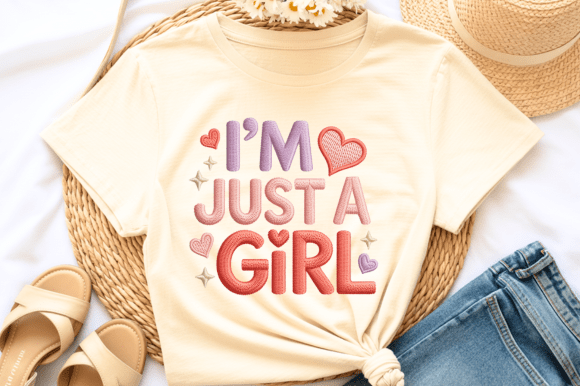
I’m Just a Girl PNG Puffy Embroidery Review
As an embroidery designer who spends weekends hunched over my machine and weekdays prepping for local craft fairs, I know that the difference between a design that sits on the table and one that sells out by noon often comes down to texture and immediate visual impact. When I first looked at the I’m Just a Girl PNG Puffy Embroidery file, my eyes went straight to the promise of that "realistic 3D puffy embroidered effect." In the world of handmade goods, texture is king. It invites touch, it catches the light, and it signals quality to the buyer before they even read the price tag.
The First Impression: Aesthetic Appeal
The description highlights "soft pastel" tones and an aesthetic vibe that leans heavily into the girly, inspirational category. From a design perspective, this is a smart move. Craft fair booths are visually noisy; customers scan dozens of items in seconds. A design that offers depth through a puffy effect stands out against flat prints or standard satin stitches. The phrase "I’m Just a Girl" carries a specific cultural weight—it is playful, slightly ironic, and deeply relatable. When combined with a soft, pastel color palette, it creates a product that feels modern yet comforting.
This isn’t just a graphic; it is a mood. For the Etsy seller or boutique maker, this translates to a product that fits perfectly into current trends of cozy, feminine home decor and apparel. It avoids being too loud or aggressive, making it accessible to a wide range of buyers who want something cute but not childish.
Product Versatility: Where It Shines
One of the most critical questions I ask when evaluating a new machine embroidery design is: where does it live? Does it work as a small accent, or does it need space to breathe? The I’m Just a Girl PNG Puffy Embroidery appears to have enough visual weight to serve as a focal point on larger items, while remaining legible as a smaller detail on others.
- Tote Bags: This is perhaps the strongest candidate. A canvas tote bag provides a sturdy, flat surface that allows the puffy effect to pop. As a tote bag design, it appeals to students, shoppers, and creatives alike. The contrast between the rough canvas and the smooth, raised embroidery creates a premium feel.
- Aprons and Tea Towels: For the kitchen-focused crafter, this makes for excellent apron embroidery or tea towel embroidery. The pastel colors will look fresh against white or cream linens. However, be mindful of fabric texture; highly textured towels can sometimes distort fine details.
- Caps and Patches: The design works well as an embroidered patch for denim jackets or backpacks. On a curved cap surface, the puffy effect adds dimension that looks professional and expensive. It transforms a basic hat into a statement piece.
- Pillow Covers and Pouches: Small handmade products like zippered pouches or decorative pillow covers benefit from the intricate detail that a puffy stitch pattern usually implies. These items are impulse buys at craft fairs, and the tactile nature of this design encourages customers to pick them up.
Production Practicality and Sales Strategy
From a business standpoint, efficiency matters. If a design takes twenty minutes to stitch because of excessive density, your profit margins shrink. While I cannot confirm the exact stitch count without the source file, designs featuring "puffy" effects often rely on heavy underlay and topstitching. This means you must ensure your production workflow can handle the time investment.
Photography is another key factor. For your printable mockup needs or online listings, this design photographs exceptionally well. The shadows cast by the raised threads create natural depth in photos, reducing the need for heavy editing. When a customer sees the texture clearly in your Etsy listing, they perceive higher value. They aren't just buying text; they are buying a tactile experience.
For batch production, consider how repeatable the design is. Pastel thread colors can show lint and dust more easily than dark threads. Ensure your workspace is clean, and advise customers that these items may require gentle care to maintain their pristine look. This attention to detail reinforces your brand as a provider of high-quality commercial embroidery goods.
Critical Technical Considerations
Before you start churning out small shop products, there are several technical hurdles to clear. The "puffy" aspect usually requires specific techniques, such as using foam stabilizer underneath the stitching. This adds bulk and changes how the hoop holds the fabric.
- Stabilizer Choice: You must use the right stabilizer. For puffy effects, a cut-away stabilizer is often non-negotiable to prevent distortion during washing. If you use a tear-away, the tension might pull the fabric, ruining the alignment.
- Hoop Size and Spacing: Confirm the hoop size required by the file. If the design is large, you may need to reposition the hoop mid-stitch. Ensure your machine can handle this seamlessly.
- Thread Contrast: Check your thread colors carefully. Pastel threads can sometimes disappear into light fabrics. Test on scrap fabric to ensure the text remains readable. If the background is too similar in tone to the thread, the design loses its impact.
- Dense Stitch Areas: Inspect the stitch density. Areas with too much stitching in a small space can become stiff and uncomfortable, especially on clothing like aprons or caps. You want the puffy effect to be soft to the touch, not like a hard plastic plaque.
- Fabric Texture: Avoid placing this on highly textured fabrics like bouclé or thick waffle weaves unless you are an expert. The needle may struggle to penetrate, or the fabric may pucker around the dense underlay.
Final Verdict for Sellers
The I’m Just a Girl PNG Puffy Embroidery is a strong contender for any crafter looking to expand their inventory of design assets. It hits the sweet spot between trendy aesthetics and timeless appeal. It is versatile enough for apparel, home decor, and accessories, making it a valuable addition to your library of digital embroidery files.
However, success depends on execution. Do not skip the test run. Create at least one real mockup on your intended product type. Feel the back of the embroidery—is it scratchy? Is it too stiff? Adjust your technique accordingly. By paying attention to these details, you transform a simple graphic into a premium finished product that customers will love.
Remember to verify your commercial licensing before selling any finished items. Owning the graphics does not always grant the right to sell physical goods derived from them. Once you have cleared those legal bases, this design has the potential to be a bestseller at your next booth, drawing eyes with its charm and keeping them with its quality.